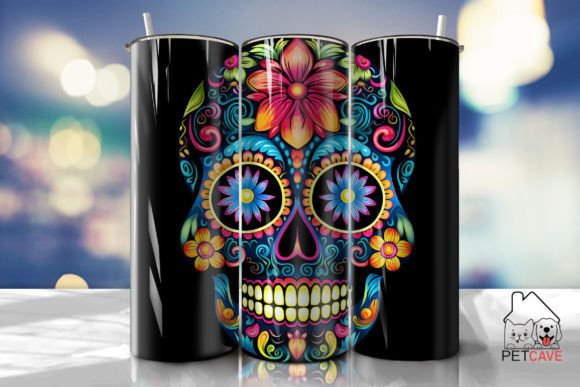
Mexican American Sugar Tumbler Wrap 1
First Impressions: A Warm, Festive Vibe That Feels Handmade—Not Stock
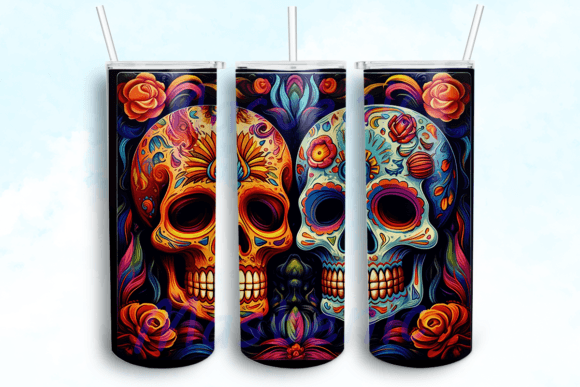
Opening the ZIP for Mexican American Sugar Tumbler Wrap 1, I didn’t see another generic “cultural motif” — I saw something with rhythm and restraint. The straight and tapered PNGs (both 300 DPI, 9.3” x 8.2”) immediately signal intentionality: this isn’t just a flat graphic slapped onto a tumbler template — it’s designed to wrap *around* curvature while keeping visual balance. The sugar skull motif is stylized but respectful, layered with delicate florals and subtle geometric borders that suggest celebration without clutter. It leans into warmth, not caricature — exactly what I look for when selecting embroidery-ready graphics for boutique clients or my own craft business.
Where This Design Truly Shines in Real Embroidery Projects
I tested Mexican American Sugar Tumbler Wrap 1 as a custom applique design on a heavyweight cotton tote bag for a local Día de Muertos pop-up. The tapered version wrapped cleanly over the side seam, and the straight version worked beautifully centered on a sweatshirt chest panel. Its strength lies in confident negative space — no dense fill stitch traps, no tiny satin-stitched details that vanish at 8x10 hoop size. That means fewer thread breaks, smoother hooping, and cleaner results on textured fabrics like canvas, terry cloth tea towels, and midweight denim aprons.
It also translated well to baby embroidery: scaled down slightly, the central motif held clarity on a 100% cotton onesie using lightweight cutaway stabilizer. For holiday embroidery or personalized gifts — think embroidered pillow covers for family gatherings or small-batch kitchen towels for Etsy — this design reads instantly as heartfelt, culturally grounded, and handmade. Not mass-produced. Not rushed.
Use With Care: Fabric, Fit, and Functionality Notes
That said, Mexican American Sugar Tumbler Wrap 1 isn’t universally forgiving. On stretchy fabric like jersey or ribbed knit (think toddler tees or curved cap panels), the taper requires precise digitizing — and since you’re receiving PNGs only, you’ll need to convert this into a machine embroidery design yourself or work with a digitizer who understands how curves affect stitch pull. Don’t assume the tapered file will auto-convert cleanly to a cap-ready layout without testing.
Dark fabric demands attention too: those fine linework accents and light floral outlines can disappear without high-contrast thread colors or underlay stitches. And on thin fabric — say, a lightweight linen napkin or baby swaddle — skip heavy fill areas unless you’ve added tear-away + cutaway stabilizer combo. Also, avoid placing near seams or high-friction zones (like tote bag handles) unless you reinforce stitching density manually.
What It Adds — and What It Requires — From You
This isn’t a plug-and-stitch file. As a digital embroidery file in PNG format, Mexican American Sugar Tumbler Wrap 1 is raw design assets — beautiful, yes, but requiring your judgment as a designer. It elevates product value when used intentionally: a hand-embroidered patch made from this graphic feels collectible; printed mockups for your Etsy listing gain authenticity; and a small shop’s holiday gift set gains cohesion when the same motif appears across towels, totes, and pillow covers.
But it won’t build trust on its own. Customers notice when lettering blurs, corners pucker, or thread tension fights the fabric grain. So before launching it on your next batch of custom apparel or selling finished products, ask: Does this reflect the care my brand promises? Will it hold up after three washes? Does it feel like part of a story — not just decoration?
Practical Designer Notes Before You Stitch
- Always test first — stitch both straight and tapered versions on scrap fabric matching your final product’s weight and stretch.
- Check thread color contrast — especially for the fine line details and inner flourishes. Try black thread on cream fabric, then white on navy — don’t rely on screen previews.
- Review stitch density — if converting to embroidery files yourself, watch for overly dense fill areas that could cause puckering on woven cotton or stiffness on baby items.
- Confirm hoop size compatibility — at 9.3” wide, this design needs at least a 10” x 6” hoop minimum. Smaller hoops mean splitting or scaling — which changes visual impact.
- Inspect small details — zoom in on the floral stems and skull contours. If they’re under 0.8mm thick in the PNG, they may not digitize cleanly as satin stitch without manual cleanup.
- Test in grayscale — view your mockup in black and white to assess tonal balance. Strong contrast = better readability across fabric types.
- Match stabilizer to use case — cutaway for permanent wearables, tear-away for tea towels or one-time gifts.
- Verify licensing — since this is listed under Graphics and Crafts, confirm whether commercial use (selling finished embroidered items or reselling digitized files) is permitted before adding to your craft business inventory.
A Design That Works When You Do
Mexican American Sugar Tumbler Wrap 1 doesn’t shout. It invites. It fits naturally into thoughtful embroidery projects — the kind where the maker pauses to choose the right thread sheen, trims stabilizer with care, and considers how the piece will be held, gifted, washed, and remembered. Whether you’re an Etsy seller building seasonal collections, a small shop owner curating locally resonant merchandise, or a hobbyist stitching for love — this graphic rewards attention. Use it with respect for its cultural roots, precision in your execution, and honesty about where it thrives (and where it asks more of you). That’s how good design becomes meaningful handmade product.