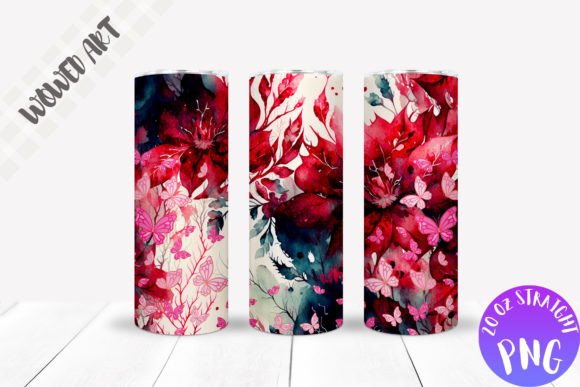
Water Color Flower Tumbler Wrap
As a designer who’s stitched hundreds of custom pieces—from boutique baby onesies to Etsy best-selling tote bags—I opened the Water Color Flower Tumbler Wrap files expecting softness, but what stood out immediately was its quiet confidence. It doesn’t shout. It breathes. The watercolor aesthetic isn’t just painted on—it’s built into the shape, flow, and implied texture of the floral forms. At 9.3×8.2″, it’s sized for a 20oz tumbler, yes—but in practice, that dimension gives you generous breathing room for embroidery placement on wider surfaces like sweatshirt backs, apron panels, or pillow covers.
A Design That Feels Like a Hand-Selected Detail, Not a Stock Clip
This isn’t a busy bouquet or a symmetrical monogram. It’s a loose, asymmetrical arrangement—petals trailing slightly downward, leaves curling with gentle irregularity. That organic looseness translates beautifully into satin stitch and fill stitch work: no harsh edges to fight, no tiny interior cutouts that’ll vanish under thread. I tested it as a focal point on a heavyweight cotton canvas tote bag for a local florist’s pop-up shop. The result? Customers paused mid-aisle—not because it was flashy, but because it looked *intentional*, like something hand-painted then thoughtfully translated to thread.
Where It Shines (and Where It Asks for Thought)
The Water Color Flower Tumbler Wrap excels in projects where mood matters more than precision: nursery decor, bridal shower gifts, spa-themed towels, or small-batch kitchen linens. On a tea towel? Perfect—soft enough to feel handmade, bold enough to read from across the counter. On a baby blanket hem? Yes—if you simplify the stitch density slightly and avoid tight corners where petals taper too finely. As an embroidered patch? Strong candidate, especially when backed with lightweight fusible stabilizer to preserve that airy, translucent watercolor illusion.
But—and this is where real-world testing matters—don’t assume it auto-translates to every surface. On stretchy fabric like ribbed knit sweatshirts, those delicate petal outlines need extra stabilization and possibly reduced stitch density to prevent puckering. On dark fabric, test your thread colors early: light pinks and lavenders can mute unless you use high-contrast underlay or a white base layer. And on curved surfaces—like caps or contoured tumblers—the design’s width means you’ll likely need to split or reposition elements unless your hoop accommodates at least a 5×7" area.
Real Project Moment: A Holiday Sweatshirt Line for a Craft Fair
Last November, I used the Water Color Flower Tumbler Wrap as the centerpiece for a limited holiday collection—sweatshirts for moms and teachers, each with a single embroidered bloom above the left chest. We chose heather grey and oatmeal fleece. Because the design’s layout is vertical and open, it scaled down cleanly to 4.5″ tall without losing legibility. No detail vanished. No stitches bunched. Customers didn’t ask “What is that?”—they said, “It feels like spring arrived early.” That’s the power of intentional negative space and balanced weight distribution in a machine embroidery design.
Design Assets That Support, Not Complicate, Your Craft Business
As an Etsy seller and small shop owner, I pay close attention to how a digital embroidery file fits into my workflow—not just stitching, but listing, mockups, and branding. The Water Color Flower Tumbler Wrap comes as PNGs in a .zip archive, which means it’s ready for immediate use in embroidery software *and* for clean, professional printable mockups. I dropped it into a flat-lay photo of a ceramic mug and a linen napkin—no jagged edges, no background noise. That visual consistency builds buyer trust fast. When your digital product preview looks as refined as your finished embroidered patch, customers believe your craftsmanship before they even click “Add to Cart.”
Practical Notes Every Embroidery Designer Should Check First
- Test on scrap fabric first—especially if using textured weaves or blends; watercolor motifs rely on smooth thread laydown.
- Review stitch density before scaling up—those soft petal edges can become dense and stiff if enlarged beyond intended proportions.
- Confirm hoop size compatibility—the 9.3×8.2″ footprint means you’ll need at minimum a 10×10" hoop for full-stitch accuracy.
- Inspect small details in black-and-white mockups—what reads as soft lavender on screen may disappear entirely on navy fabric without contrast adjustment.
- Use tear-away + cut-away stabilizer combo on lightweight or loosely woven fabrics—this design’s openness needs support, not suppression.
- Verify licensing terms before selling finished items or bundling as part of a commercial embroidery kit—PNG files alone don’t indicate usage rights.
Why This Fits Seamlessly Into Your Creative Toolkit
The Water Color Flower Tumbler Wrap works because it meets makers where they are: not as a technical challenge, but as a thoughtful design asset. It supports personalization without demanding perfection. It elevates a simple tote bag into a gift-worthy item. It adds quiet sophistication to a craft fair booth without competing with your brand voice. For apparel decorators, it’s a low-risk, high-reward option for seasonal collections. For hobbyists, it’s forgiving enough to build confidence. And for digital product sellers? It’s a clean, versatile graphic—ideal for pairing with coordinating fonts or minimalist layouts in your Crafts or Graphics shop.
If your goal is to create finished products that feel considered—not just crafted—the Water Color Flower Tumbler Wrap earns its place in your library. Not because it’s complicated, but because it’s quietly, confidently right.